


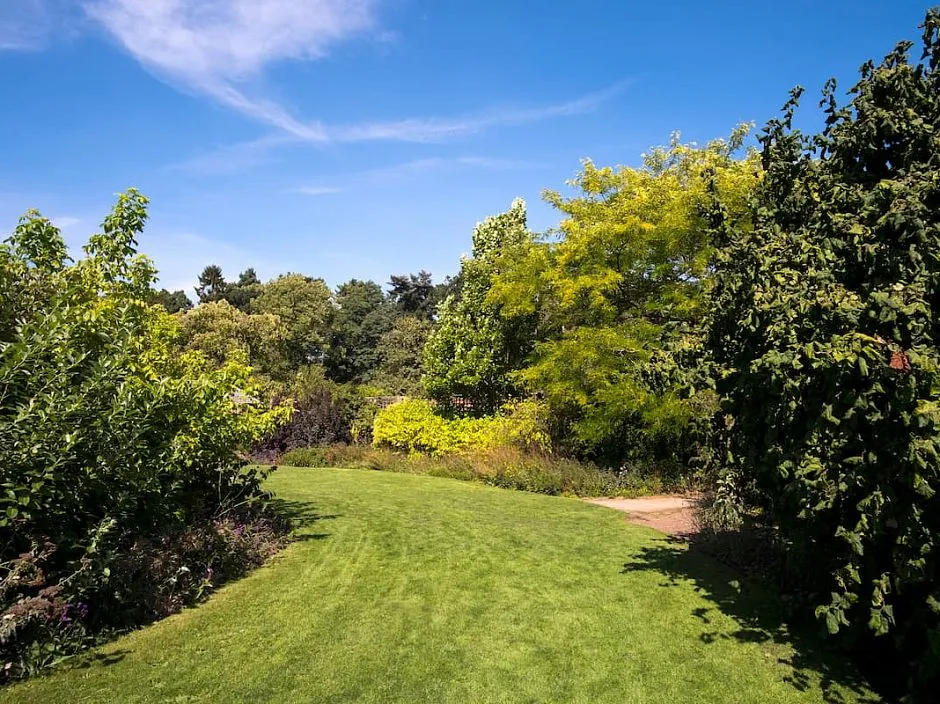
Sochi Dendrarium — one of the most popular and picturesque attractions on the resort, drawing both locals and tourists fr om around the world. This park is a true symbol of the city, offering unique experiences and allowing visitors to immerse themselves in nature right in the heart of Sochi.
Located in the Khosta District, the Dendrarium covers 46.4 hectares — an area comparable to nearly 90 football fields. It features over 2,000 species of exotic plants, making it one of the most diverse and richest botanical collections in Russia. In this unique location, you’ll encounter rare trees and shrubs brought from every corner of the globe.
Where is the Sochi Dendrarium Located
The Sochi Dendrarium is situated in the Khosta District of the city, spread across a spacious 46.4-hectare territory — equivalent to 90 football fields. This location draws attention thanks to its remarkable collection of exotic trees and plants.
Address:
74 Kurortny Prospekt, Khosta District, Sochi, Russia
(Yandex Maps coordinates: 43.569093, 39.745421)
How to get there:
- By bus № 105 or 105c — if traveling from Krasnaya Polyana
- By bus № 88 — if coming from Adler, get off at the “Circus” stop.
What to See in the Sochi Dendrarium
The Sochi Dendrarium is not just a park — it’s a true natural reserve and part of the Sochi National Park, wh ere a strict conservation regime helps protect its unique ecosystem. Visitors are prohibited fr om picking plants, collecting seeds, sunbathing, or playing on the lawns. Pets are also not allowed, as they may damage the fragile natural environment.
Just 130 years ago, this area was an untamed, overgrown mountainside. But thanks to its first owner, Sergey Khudekov — publisher of Peterburgskaya Gazeta — a peach orchard, plum grove, and ornamental garden were planted here, designed in the style of late 19th-century Franco-Italian parks. Over the decades, nearly 200 species of exotic plants were introduced to the Dendrarium, brought from Crimea, the Caucasus, and Germany.
Today, the Sochi Dendrarium is a vibrant explosion of color, delighting the eye in every season. You can truly call it a journey through the world’s flora — it features plants collected from every continent.
Plant Collection
On a territory comparable in size to Vatican City, over 1,500 species of trees and shrubs thrive. In the Dendrarium, you can encounter rare specimens such as centuries-old oaks and cypresses, magnolias and lotuses, agaves and roses, cycads and myrtles, as well as eucalyptus and Caucasian fir. The park takes special pride in its vast palm collection (24 species), oaks (80 varieties), and pines (76 species).
The Dendrarium is divided by Kurortny Prospekt into two distinct sections.
The Upper Park — a realm of exotic flora and sculptural compositions. Here you’ll find agaves and cacti with imposing spines, the “Peacock” flowerbed, the Cypress Alley, and the “Amours” Fountain. From the upper observation decks, breathtaking panoramic views unfold. Don’t miss the cozy benches scattered throughout — perfect for relaxing after a stroll.
The Lower Park — a flatter, more accessible area ideal for walks with children, including those in strollers. This section features artificial cascading ponds inhabited by pelicans, swans, ducks, and nutrias. Be sure to visit the rose garden, showcasing rare and unusual rose varieties.
Giants of Nature
The park is also home to true natural wonders — towering sequoias native to the Pacific coast. These giants can reach heights of over 110 meters, and the oldest trees in the Dendrarium are nearly two thousand years old. The metasequoia, brought from China in 1952, has also claimed its place in the Sochi Dendrarium, now standing 31 meters tall.
Pure and Healing Air
The air in the Dendrarium is not only exceptionally clean — it also possesses therapeutic properties. Just 15 minutes of walking through the eucalyptus grove can have a beneficial effect on your respiratory system. Along the magnolia alley and in the rose garden, visitors are enveloped in exquisite, soothing fragrances.
After crossing Kurortny Prospekt, you’ll discover the bamboo grove — another highlight well worth your attention.
Japanese Garden and Animals
One of the coziest corners of the Dendrarium is the Japanese Garden, wh ere cherry trees (sakura), cryptomerias, and bald cypresses grow around a traditional-style pavilion. A serene pond filled with koi fish enhances the tranquil, meditative atmosphere.
Animal lovers will enjoy the park’s enclosures, home to African marabou storks, parrots, peacocks, raccoons, porcupines, as well as ornamental ducks and pelicans, geese and swans inhabiting the picturesque pond. Children are especially charmed by the playful nutrias and cheerful frogs.
Villa “Nadezhda”
This elegant snow-white mansion, built in the Italian Renaissance style, was erected in 1889 by the Dendrarium’s founder, Sergey Khudekov, in honor of his wife, Nadezhda Alekseyevna. Today, the villa houses a museum dedicated to Khudekov’s life and the history of the park’s creation. The interiors preserve the 19th-century ambiance, featuring original furniture, paintings, and archival photographs fr om that era.
Cypress Alley
Leading from the main entrance to Villa “Nadezhda,” this alley is one of the central landmarks of the Dendrarium. Towering cypresses — reaching up to 30 meters in height — create the impression of walking through a Mediterranean garden. Planted during Khudekov’s time, these trees have thrived beautifully in Sochi’s mild climate.
Bamboo Grove
Here, dense bamboo towers up to 20 meters high, creating a uniquely immersive atmosphere reminiscent of East Asia. The leaves whisper in the breeze, and the latticework of slender stalks offers a serene sense of seclusion. Some of the plants in this grove have been growing here for over 80 years.
Rose Garden
This corner of the Dendrarium draws special attention with its collection of more than 80 rose varieties, blooming from May through October. Flowers in every hue — from snow-white to deep burgundy — fill the air with exquisite fragrances, attracting not only tourists but also swarms of butterflies.
Sculptures of the Sochi Dendrarium
The entrance to the upper section of the Dendrarium, from Kurortny Prospekt, is framed by an elegant white balustrade with a balcony, strict columns, and antique vases, flanked by stone arches. Together, these elements create a harmonious ensemble wh ere architecture and sculpture blend seamlessly into the garden’s atmosphere. This unique park can truly be experienced as an open-air museum.
One of the Dendrarium’s main ornaments is the central rotunda, built in 1935 and clearly visible fr om Kurortny Prospekt. Around it unfolds an entire garden with cascading fountains and winding alleys — the elevation changes allow visitors to admire sculptures and architectural compositions from multiple perspectives. For example, the statue of Princess Swan, crowning the “Fairytale” Fountain, appears especially majestic — and from the observation deck, she meets your gaze at eye level.
The Sochi Dendrarium is richly adorned with sculptures, amphorae, vases, and fountains — many over a century old. Each piece serves as a living testament to the artistic taste of the park’s creator, Sergey Khudekov, who was not only a connoisseur of ballet but also an admirer of graceful forms.
The Dancer — one of the most famous sculptures — depicts a ballerina reminiscent of Esmeralda, a star of her time. The sketch for this statue was drawn by Khudekov himself, and it was cast at an iron foundry in St. Petersburg in 1899. This work embodies Khudekov’s love for ballet and has become a symbol of the harmony between arts.
Nearby lies the “Literary Bench” — a semicircular stone composition with four half-columns and marble busts of Russia’s greatest writers: Pushkin, Tolstoy, Dostoevsky, and Gogol. This architectural piece symbolizes the creator’s deep reverence for literature and the arts.
Another fascinating sculptural group is the fountain with Amours and the statues of Atalanta and Hippomenes. In myth, Atalanta was swift and undefeated in races — until Hippomenes, deeply in love with her, received three golden apples from Aphrodite. During the race, he tossed the apples before her feet to distract her — and thus won. But forgetting to thank Aphrodite, the lovers were transformed into lions, who now guard the Moorish Pavilion.
The statues of Hippomenes and Atalanta stand at the foot of the park’s grand staircase — and remain one of the most romantic corners of the Dendrarium.
History of the Sochi Dendrarium
The Sochi Dendrarium was founded in the late 19th century by Sergey Khudekov — a renowned playwright and passionate amateur horticulturist. In 1889, he built Villa “Nadezhda” and began laying out the park, planting exotic species brought from across the globe: the Caucasus, Asia, the Americas, and Australia. After the Revolution, the estate was nationalized, and in 1922, the grounds were officially transformed into a dendrarium. Today, it stands as a unique park-museum spanning 46 hectares — a federally protected cultural and natural monument.
The Dendrarium is divided into two sections: the Upper Park and the Lower Park. Between them stretches a cable car line, offering breathtaking panoramic views of Sochi and the park below. The entire territory is further subdivided into 19 thematic zones, each showcasing the flora of different global regions: the Caucasus, the Mediterranean, East Asia, the Americas, and many more.
Bald Mountain and Its Mystical Atmosphere
At the turn of the 20th century, the territory of the Sochi Dendrarium was adorned with picturesque Colchic forests. At the mountain’s base grew alder groves, while its southern slopes were home to majestic oaks, beeches, and hornbeams.
One of the park’s distinctive features is its sweeping open meadows — possibly hinting at the origin of the mountain’s name: Bald Mountain. This place draws attention not only for its landscape but also for the many legends woven around it.
The Mystique of Bald Mountain
In Russian folklore, Bald Mountain was traditionally believed to be a gathering place for witches’ sabbaths. According to folk beliefs, such sites were linked to mystical events, and certain signs could reveal a “witches’ circle” or a clearing wh ere secret rituals took place. These signs included twisted stalks of grain, unusual mushroom rings, or patches of barren earth — land that remained eerily “bald.”
However, Sochi’s Bald Mountain has no connection to such supernatural lore. It received its name not fr om ancient superstitions, but in the late 19th century — when its northwestern slope was cleared of trees to make way for dacha construction. Stripped of its greenery, the mountain earned its nickname: Bald.
The southeastern slope was acquired by Sergey Khudekov, who transformed this very land into the Sochi Dendrarium — turning what was once bare into one of the city’s most beautiful and extraordinary places.
Walking Routes Through the Dendrarium
The best way to begin exploring the Sochi Dendrarium is from its upper section. Here, you’ll encounter plants from the subtropical forests of Australia, North America, East Asia, the Caucasus, and New Zealand. For visitor convenience, you can ascend via the cable car — a four-minute ride that reveals breathtaking views of the Black Sea and the lush green “ocean” stretching beneath your feet.
From the upper observation deck, a stunning panoramic vista unfolds: you can see not only the city and port, but also the bay, the peaks of the Caucasus Mountains, and the iconic Mount Akhun.
On hot days, the perfect escape is a stroll along the artificial berceau alleys — shaded walkways draped in green vines, offering cool refuge from the blazing sun.
Further Routes
After soaking in the views, you can choose your next path based on personal preference. One of the most picturesque options is a walk through the sequoia and eucalyptus grove, or a visit to the “Garden of Continuous Bloom.” You may also explore the Chinese Courtyard, wander through the Japanese Garden, and descend toward Villa “Nadezhda,” concluding your walk at the Moorish Pavilion — a beloved location for wedding photo sessions.
Here, it’s common to encounter newlyweds posing for luxurious portraits styled after 19th-century aristocratic estates.
For Families with Children & Animal Lovers
If you’re traveling with children or simply enjoy observing wildlife, don’t miss the Ornitharium, wh ere you can see ostriches and peacocks up close. The peacocks occasionally wander beyond their enclosures, strolling freely along the park’s pathways — adding vivid, living brushstrokes to the landscape.
Lower Dendrarium
Cross beneath Kurortny Prospekt via the underground passage to reach the lower section of the Dendrarium. Here, you’ll be greeted by seas of blooming plants, cozy pergolas, lush bamboo thickets, and cascading ponds — all combining to create a serene, tranquil atmosphere. In this part of the park, you’ll also encounter an unusual sculpture offering a modern artistic interpretation of Adam and Eve.
Prices and Opening Hours
The main entrance and ticket booths are located opposite the residential complex “Novaya Aleksandriya.”
Admission Tickets:
- Adults: 320 RUB
- Children (7–14 years): 150 RUB
- Children under 7: Free
- Guided tour (additional): 200 RUB per person
Cable Car Tickets (includes ascent):
- Adults: 700 RUB
- Children (7–14 years): 400 RUB
Lower Dendrarium Only (separate entrance):
- Adults: 150 RUB
- Children (7–14 years): 70 RUB
Opening Hours:
- Summer (approx. June–August): Daily, 8:00 AM – 9:00 PM
- Shoulder Season (spring/autumn): 9:00 AM – 6:00 PM
- Winter (approx. November–February): 9:00 AM – 5:00 PM
Ticket offices close one hour before park closing time.
Important: Prices and opening hours are subject to change. For the most up-to-date information, please visit the official website of the Sochi Dendrarium.